before c. 1330 · legend
Legends at the Lake
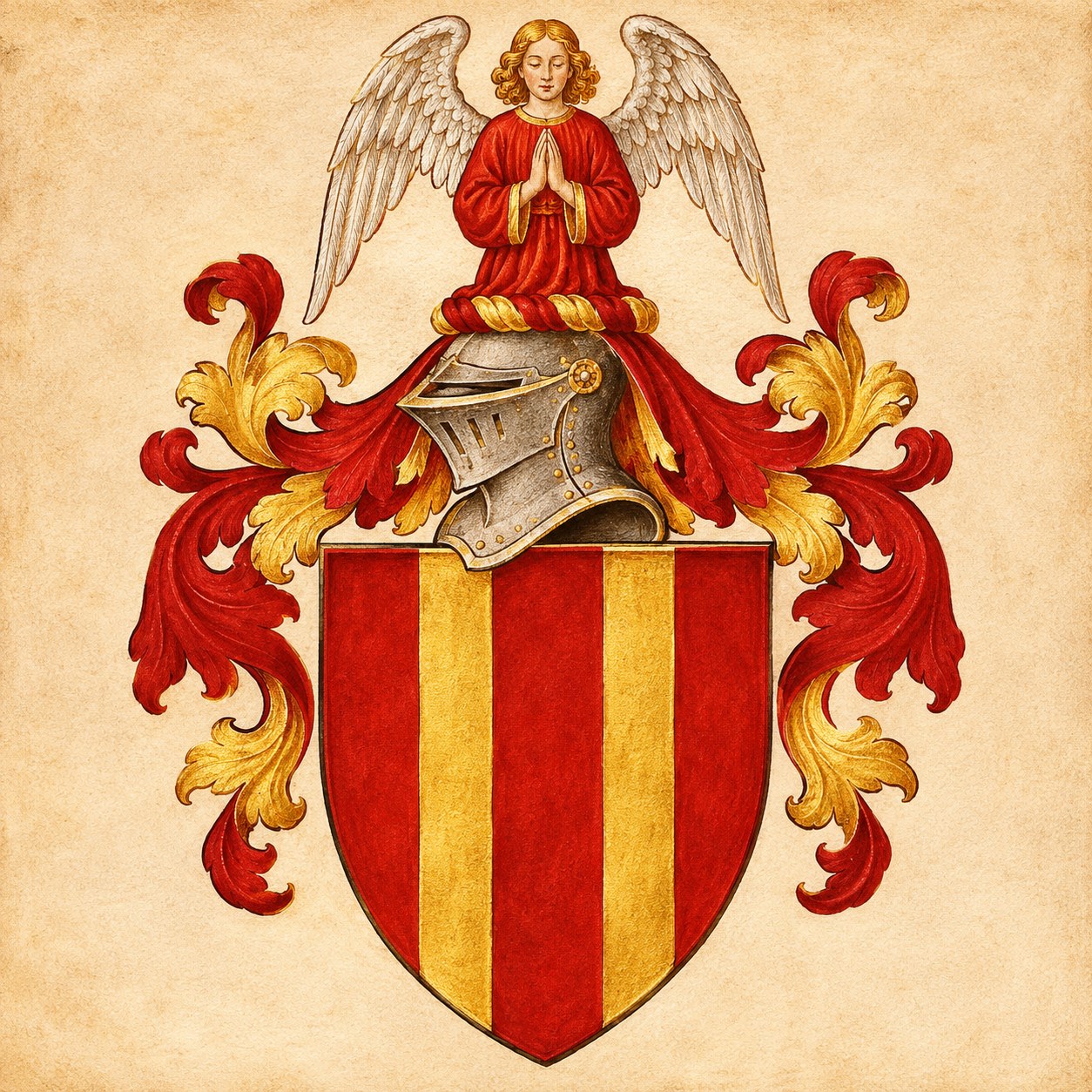
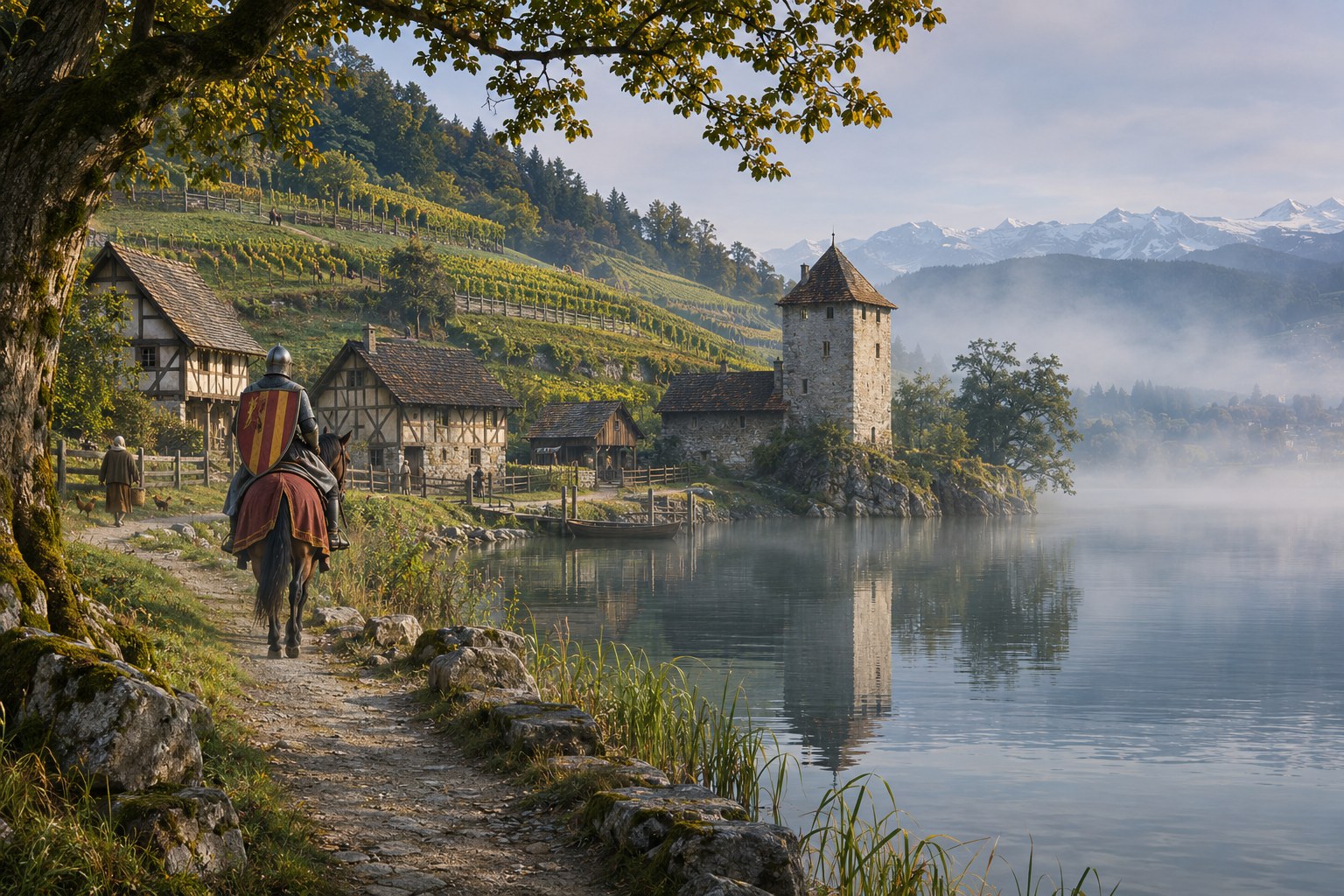
Every old family has its legends, and ours begins with knights. An old family saga, retold in the notes "Myten om Würtzslægten", says that a Hermann von Urikon was born in Erlenbach in 1190. It says his grandson Wizo Wirtz married Verona von Urikon in 1316, the daughter of the knight Albrecht von Ürikon. Albrecht really existed. His three sons fell on the Habsburg side at the Battle of Morgarten in 1315, and that December he gave his lands to Einsiedeln Abbey in their memory. In the legend, Verona's marriage carried the knights' lands and red-and-gold arms over to the Wirz family. Historians in Zürich have rejected that direct descent, so we tell it as a legend, not a fact. A second legend came up in Denmark around 1910: that the family descended from Field Marshal Paul Würtz, who died in Hamburg in 1676 and left a fortune. That claim was disproved in 1970. Some computer-made family trees go back even further, to the year 850. No records support them.
c. 1331–1530
The Stewards of Erlenbach
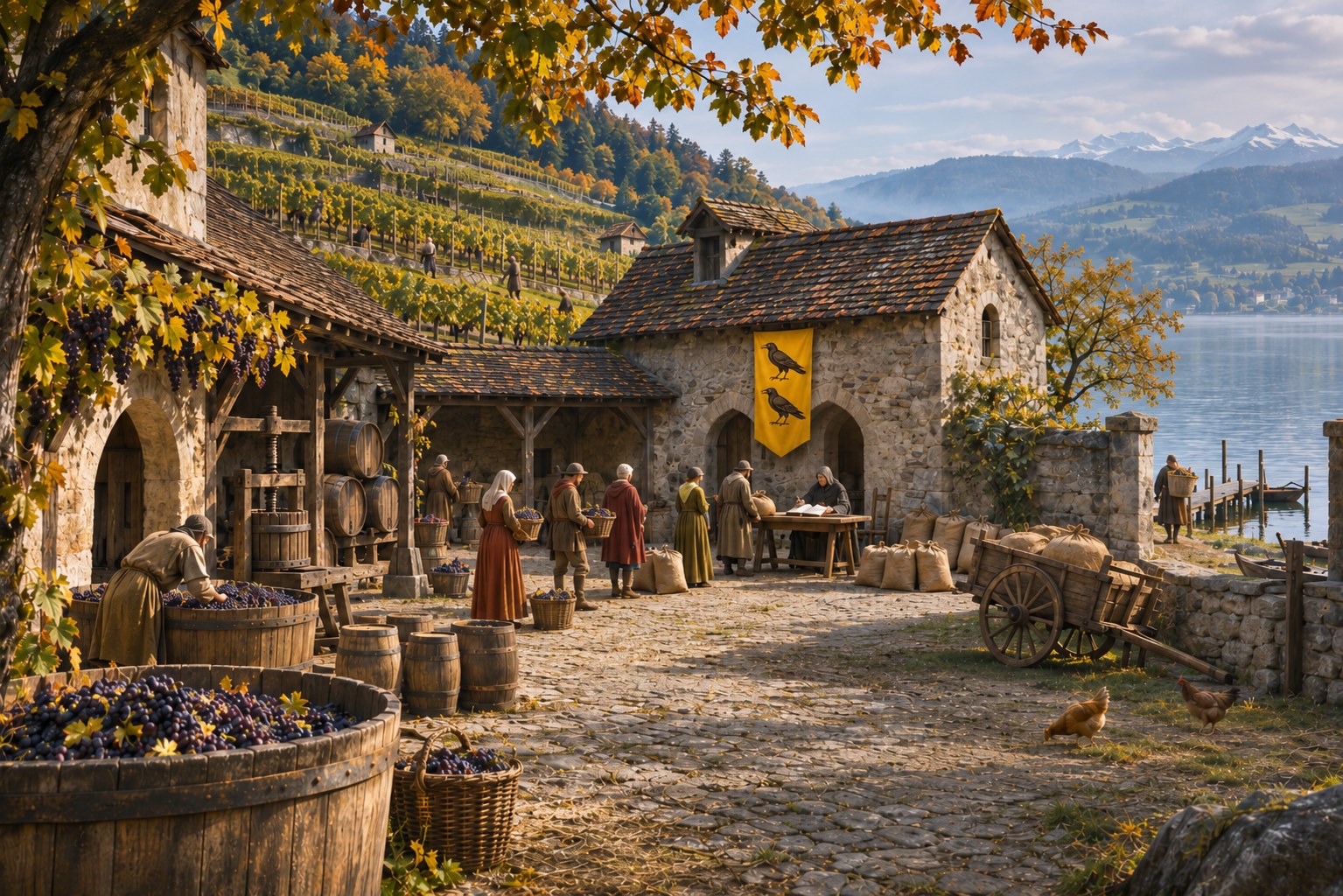
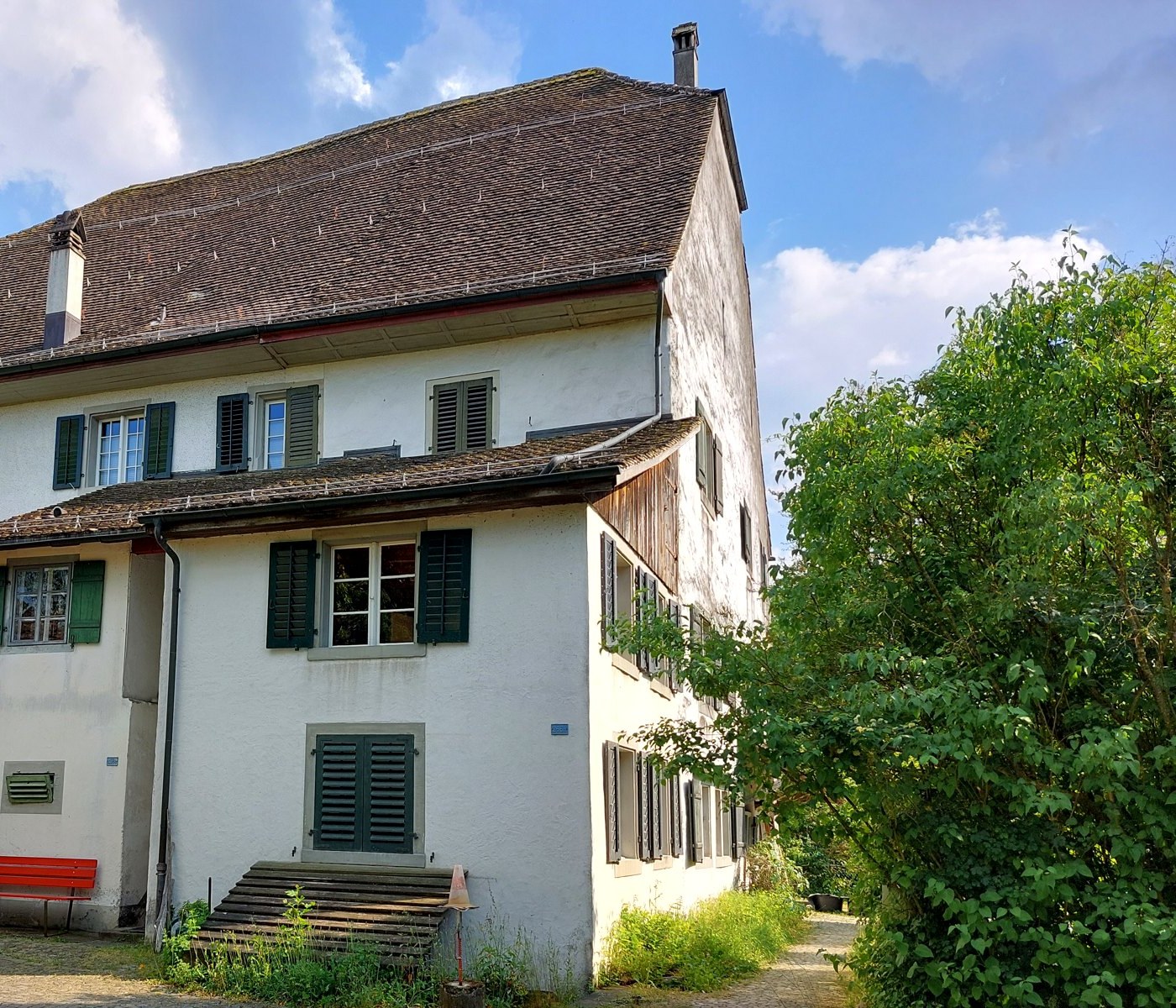
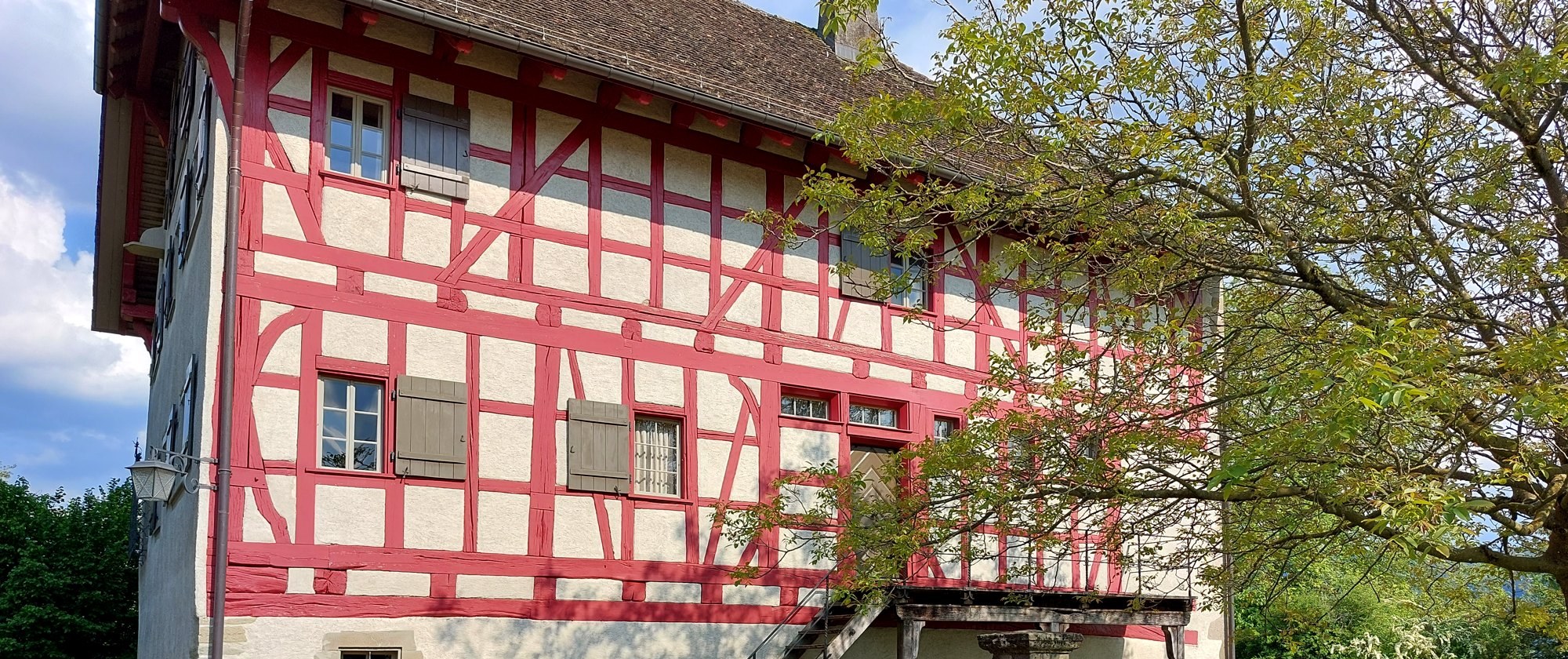
The documented story begins in Erlenbach, a wine village on the eastern shore of Lake Zürich. Around 1350, Einsiedeln Abbey made a man named Johannes, of the Kaltbrunn family, its "Wirt" in Erlenbach. That meant he was the steward who collected the abbey's dues and judged small disputes. He appears in a deed from 1364. His sons were known as "des Wirts Söhne", the steward's sons, and from that word the surname Wirz grew. One son, Hans, became a citizen of Zürich in 1381. Another, Ulrich, ran the abbey's lands in Ürikon. For more than a century the office of Ammann stayed in the family. Conrad Wirz held it from 1407 until about 1443 and gave money to the church in Küsnacht for the souls of his family. Then came his son Heinrich, Berchtold and Rudolf. A related branch in Ürikon rose higher still. In 1492 three Wirz brothers were granted arms, and the same year Heinrich Wirz built the Burgstall in Ürikon. The Ritterhaus followed in 1531. Both buildings still stand.
1500–1659
Lochhaus and the Lake
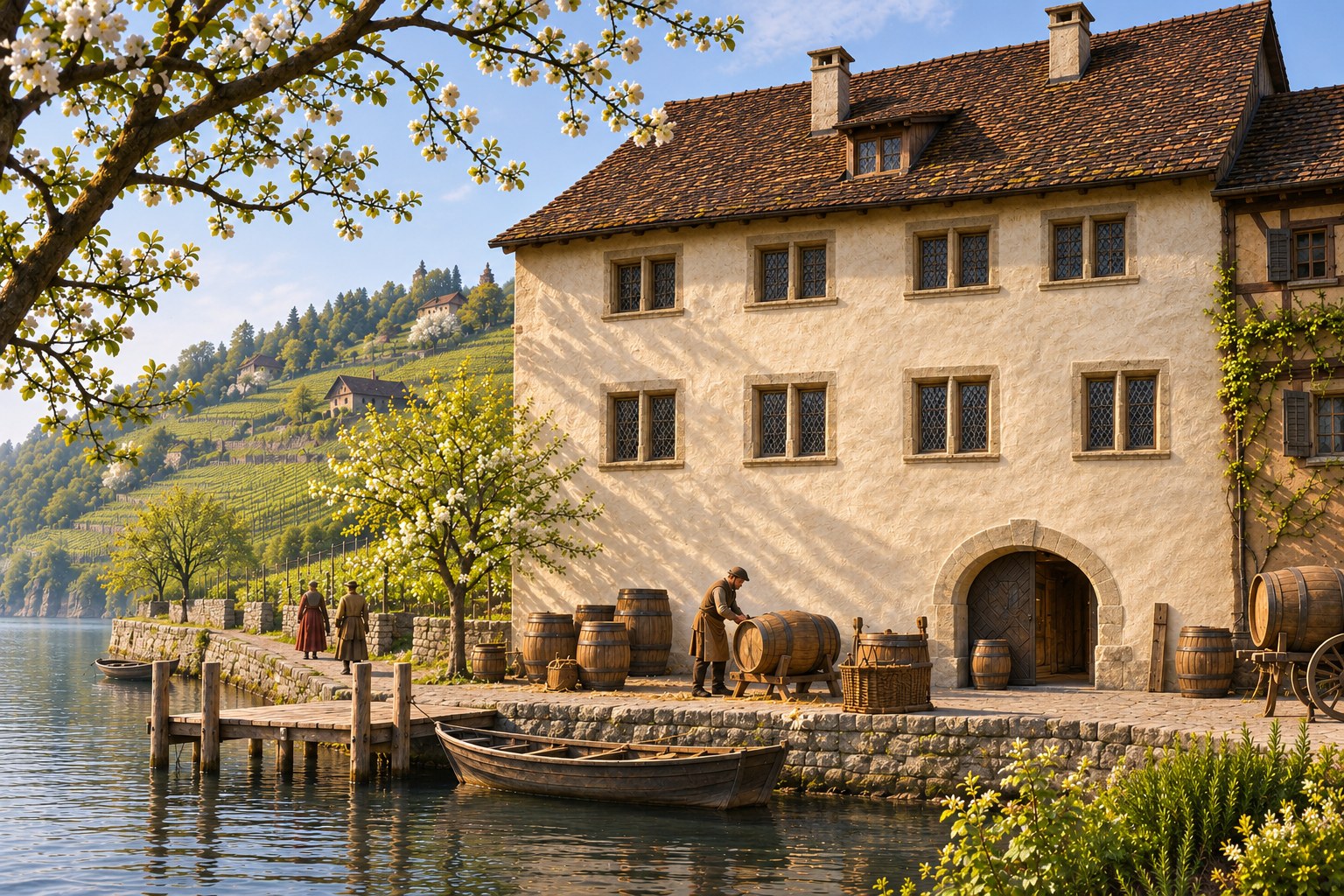
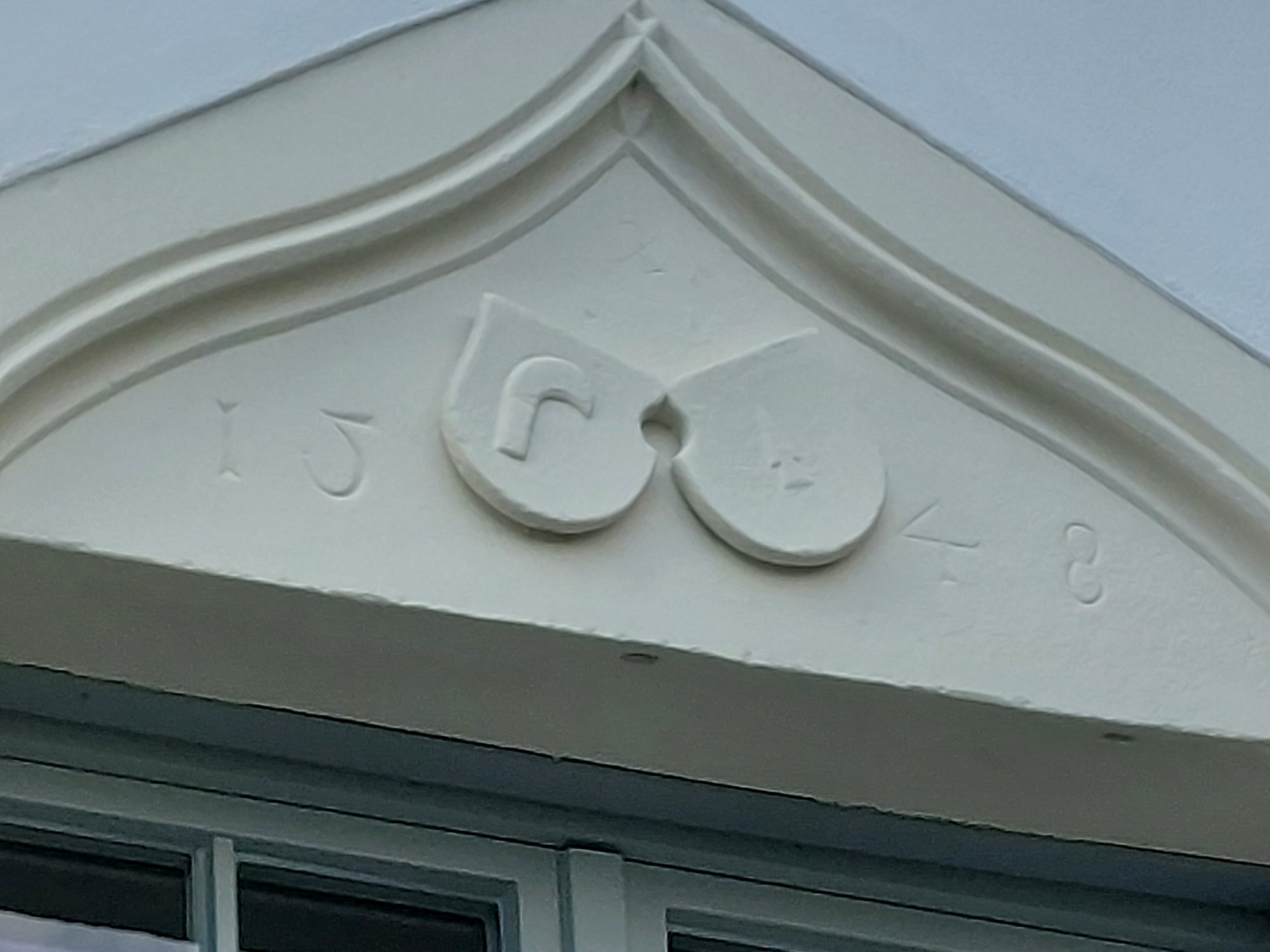
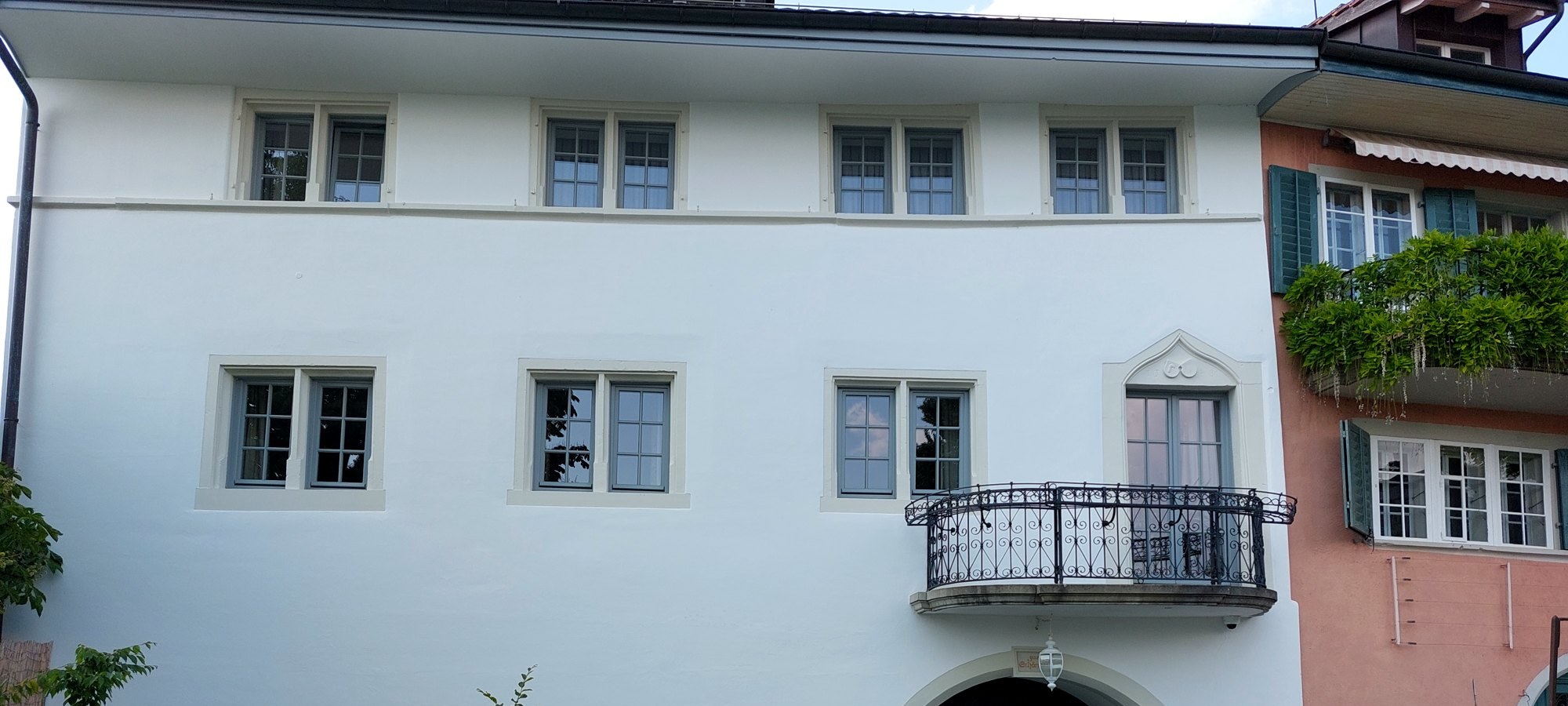
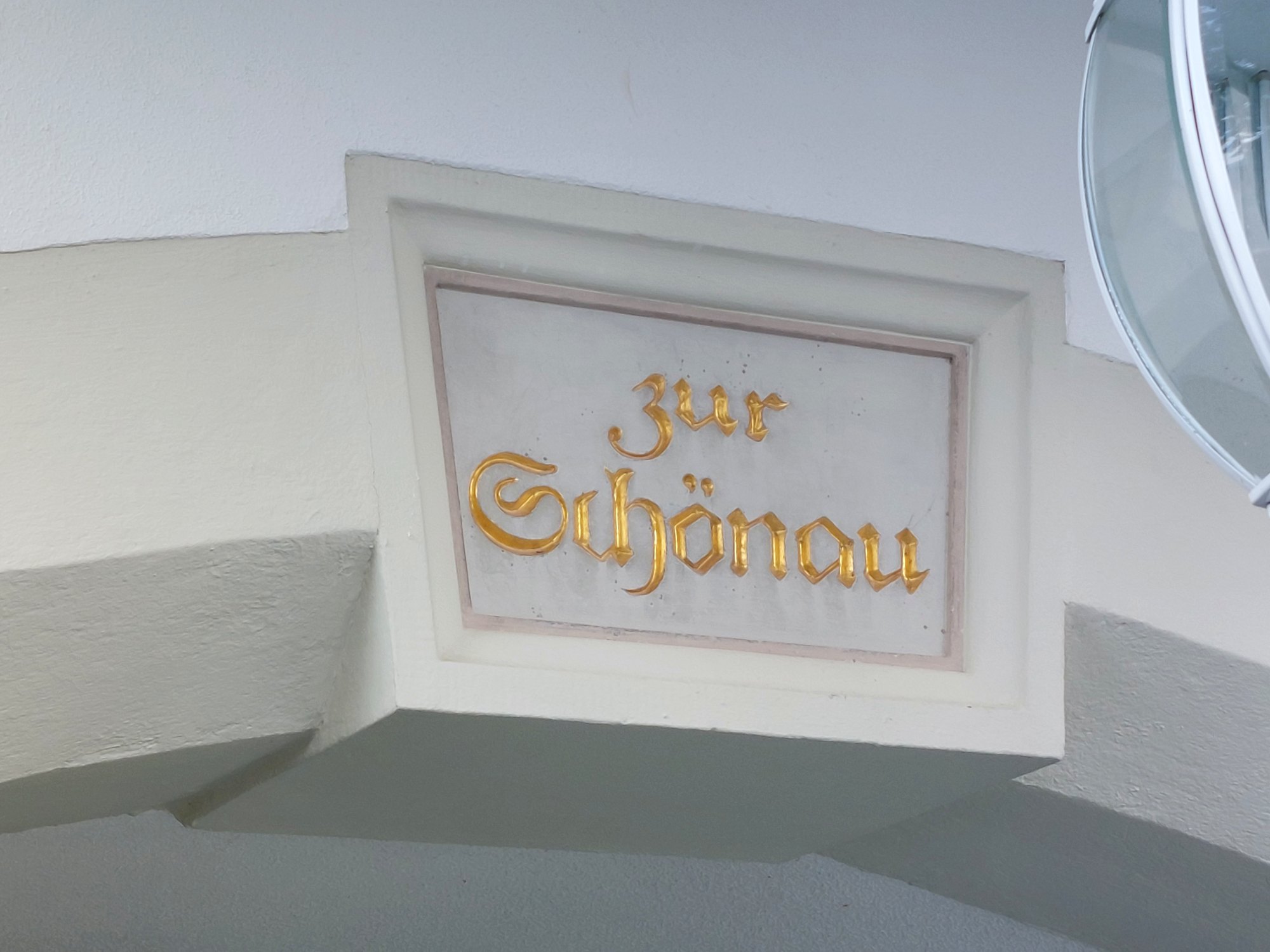
Before 1529 Anna Wirz, daughter of the abbey's steward Andreas Wirz, married Jacob Wirz. Where Jacob came from is still unknown, though he seems to have had ties to Zürich, where their first children were baptised in the Grossmünster. Jacob became one of the richest men on the lake. In 1548, as deputy bailiff, he built a stone house on the shore at Erlenbach, called Lochhaus and known today as "Schönau". Above a window he carved two shields side by side with the year 1548: his own, with a vine-pruning knife, and his wife's, with a wine spigot. The carving is still there. Jacob later became Ammann too. When he died in 1574, the office went to his young grandson Heinrich, with Heinrich's father Hans acting for him. Heinrich (1564–1636) married Elsbeth Müller. Their son Hans Heinrich (1590–1659) was born in Lochhaus and worked as a winegrower and master cooper. He married twice and had a large family. One of his sons was Felix.
1651–1759
New Vines in Schriesheim
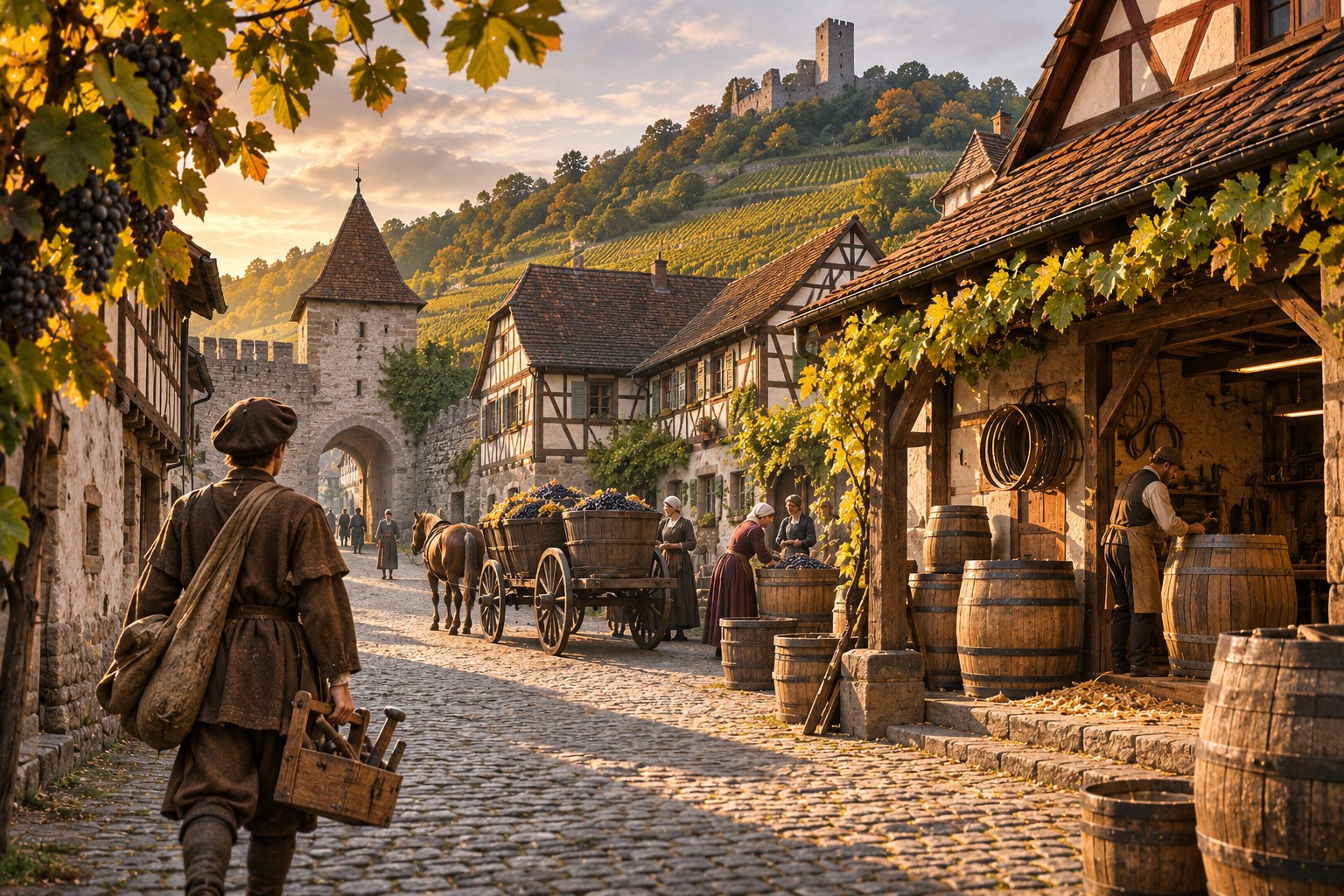
Felix Wirz was baptised in Erlenbach on 3 December 1626. He learned the cooper's trade and how to grow vines. But his father's household kept growing and money was short, so Felix left Switzerland. He went first to Neustadt an der Haardt, and in 1651 he settled in Schriesheim an der Bergstraße, a wine town a few miles north of Heidelberg. In 1652 he married Anna Bollinger, the daughter of another Swiss family who had moved there. In the German church books the name Wirz gradually became Würtz. Felix worked as a master cooper and winegrower and owned the house at Leutershäuser Straße 1. His younger brother Ulrich, a joiner, joined him but died there in 1661. Felix's son Hans Jacob (1673–1747) carried on the same trades in the same house. In 1702 he married Susanna Margaretha Mutschler, daughter of the innkeeper and mayor of nearby Handschuhsheim. Their youngest son, Johann Heinrich, was baptised in December 1723. He married Maria Johanna Ulrich in 1744 and became a winegrower and cooper like his father.
1759–1795
The Journey North, 1759
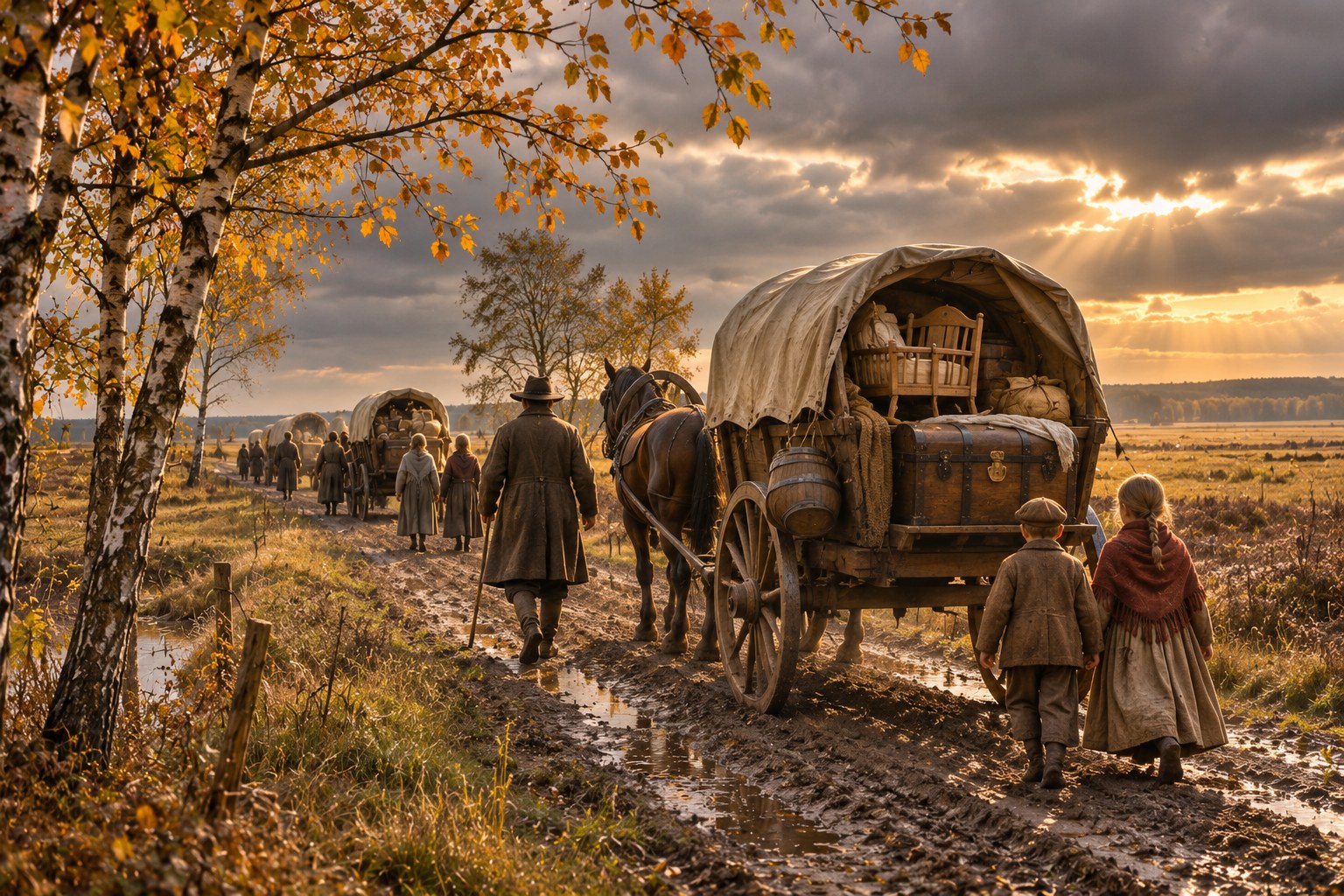
In 1759 the Danish king Frederik V invited German families to farm the empty heaths of Jutland. Johann Heinrich Würtz was one of the first in Schriesheim to sign up. On 25 September 1759 he left Frankfurt am Main with his wife Maria Johanna and four children. They travelled with nine Schriesheim families, and his name stands first on the list, so he seems to have led the group. The recruiter noted that two of the families brought two fully loaded wagons each. They reached Fredericia on 2 November 1759 and spent the winter there. In May 1760 they moved on to the new colony of Frederikshede, today's Havredal, on the Alheden heath. The first years were hard. Harvests failed, and many families gave up or were sent away. The Würtz family was among the roughly 48 families who stayed. In 1763 Johann Heinrich received the lease on farm no. 10, which stayed in the family until about 1992. Maria Johanna died in 1778. Johann Heinrich then moved to North Zealand and died at Tikøb in 1795.
1760–1896
Potato Germans on the Heath
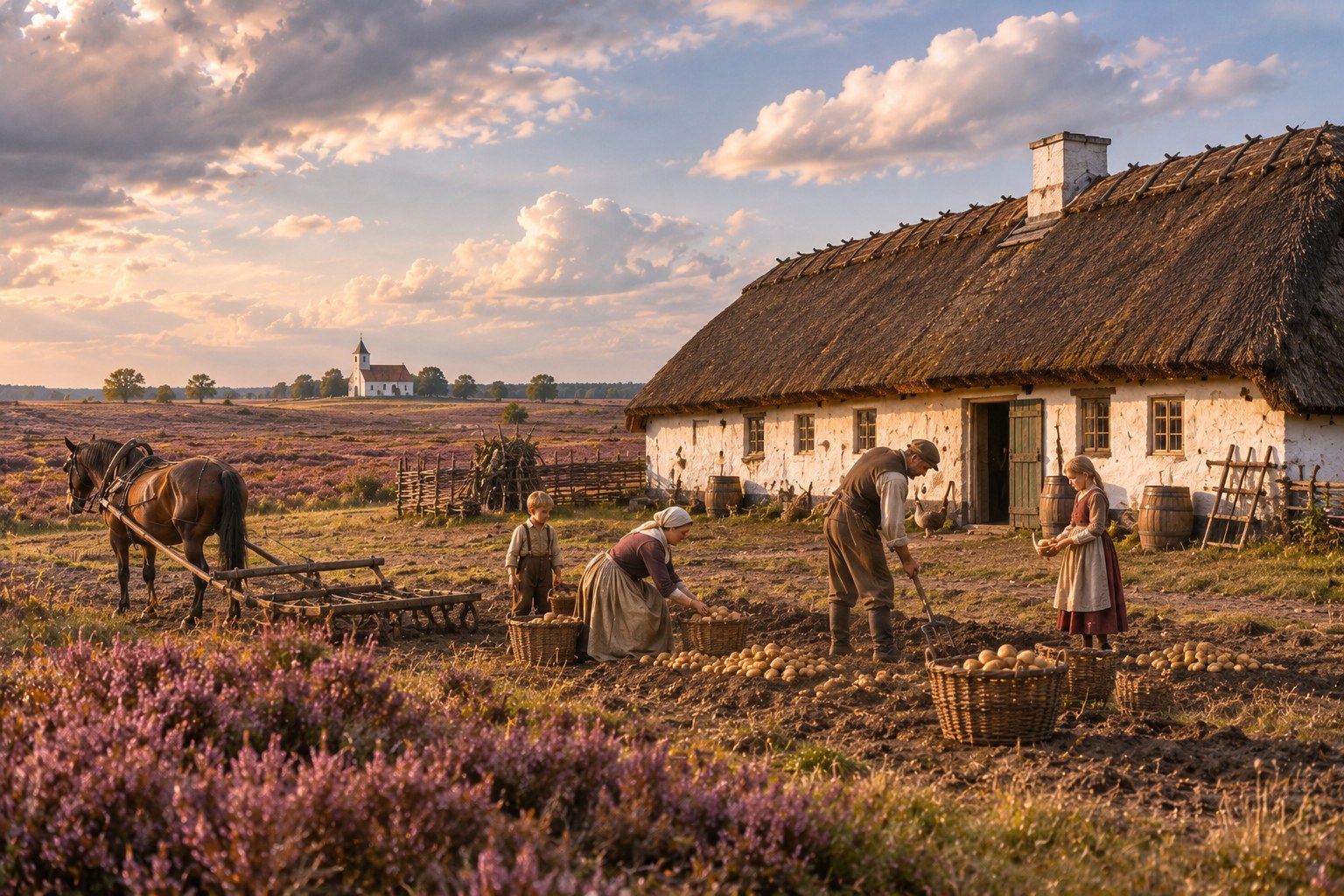
The colonists became known as "kartoffeltyskere", the potato Germans, because they grew potatoes on the poor sandy soil. Johann Adam Würtz had been thirteen when the family left Schriesheim. In 1769 he married Anna Margaretha Herbelschmidt, a young colonist widow, and in 1779 he took over his father's farm in Havredal. According to the church book he was blind for the last thirty years of his life. He died in 1821. His son Adam, born in Havredal around 1776, married Anna Catharina Wackerhausen, the daughter of another colonist family. Adam farmed his own place in Havredal until 1840, and the couple had twelve children. The youngest, Johannes, was born on 30 September 1822. In the records he appears as Johannes Adamsen Würtz, "Adam's son". He married Mette Kirstine Pedersdatter of Bisballe and moved to Almind parish near Viborg, where he died in 1896. In Frederiks churchyard a memorial stone from 1959 lists the colonist families, Würtz among them.
1865–1988
From Heath to Modern Denmark
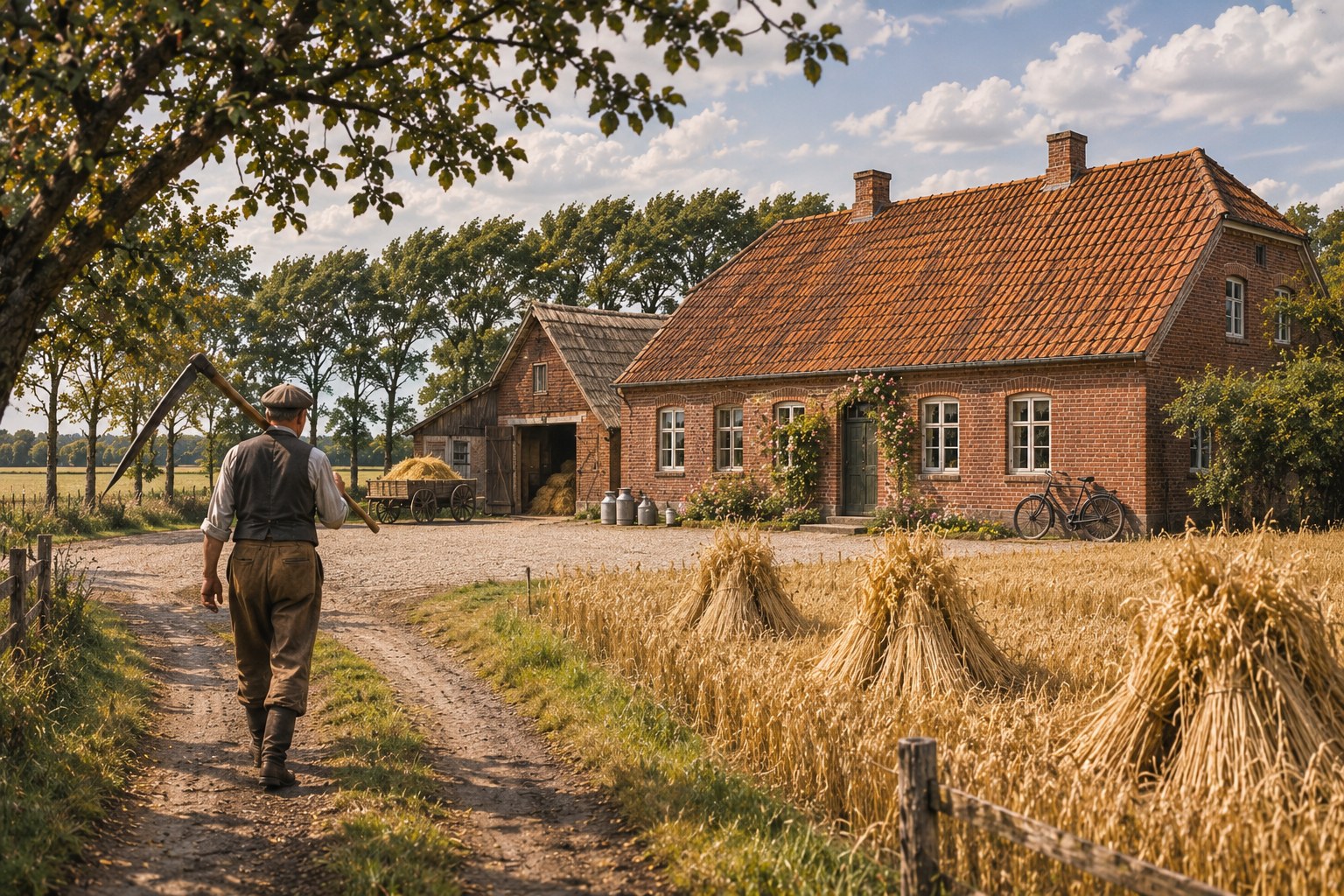
Adam Würtz was born in Almind parish on 31 January 1865. In 1886 he married Bodil Marie Jensen in Dollerup, and they farmed there and raised a large family. Their son Jens Michael, born in 1888, married Ane Marie Andersen, who was born at Frederikshede. Before long the family was back on the old colonist heath: their children were born at Grønhøj and Havredal between 1911 and 1922. Twin girls born in 1922 both died as infants. Jens Michael died in 1961 and was buried at Frederiks. His son Arnold Peter was born in Havredal on 2 July 1913. In 1938 he married Martha Amalie Laursen in Haderup, and they brought up their children in Fårbæk. Family memory says times were often hard. Arnold sometimes worked as a day labourer, going from farm to farm to ask for work, and when there was none, one meal had to last several days. The family once owned a small farm in Havredal, but it was sold, and the house no longer stands. Arnold died in Haderup in 1988.
1940s–today
The Family Today
Svend, Bo's father, grew up in Fårbæk as one of seven children. He left school after seventh grade. His teacher wanted him to go on, but his father arranged an apprenticeship with a baker in Haderup instead. Svend met Viola, and after some years of night shifts in an Aarhus bakery and work at textile firms in Herning, the family settled in Ilskov. There Viola ran the grocery shop, and Svend took a civilian job at Karup air base, first looking after accommodation and later running a supply store. He also worked hard for the village, helping to get a swimming pool and a sports hall built. Bo was born in Ilskov in 1969 and grew up there with his brothers Jimmy and Jesper. Music and electronics led him into the audio trade, first in Denmark, then for many years in the UK, and finally to founding his own loudspeaker brand, TIBO. Bo and his wife Tinna now live in Spain. They have two sons: Mathias Sølvkær Würtz, who is married to Hollie Würtz, and Joachim Sølvkær Würtz. In June 2023 members of the family visited Lochhaus in Erlenbach and the Ritterhaus in Ürikon, where the story began.